New UNODC Toolkit Aims to Preserve Evidence After Terrorist Attacks
A collaboration between Israel and international partners seeks to standardize evidence collection for sexual violence in chaotic post-attack environments.
By Vanessa Diaz ·
Prof. Yifat Bitton, a veteran specialist in sexual violence law, admitted that the events of October 7, 2023, initially made her question her ability to contribute to the field. Despite over two decades of experience helping victims seek justice, the scale of the Hamas attacks presented an unprecedented challenge. Bitton, who serves as president of Achva Academic College and heads the RAIA Project, noted that the situation was unlike anything previously encountered in the legal or forensic arenas.
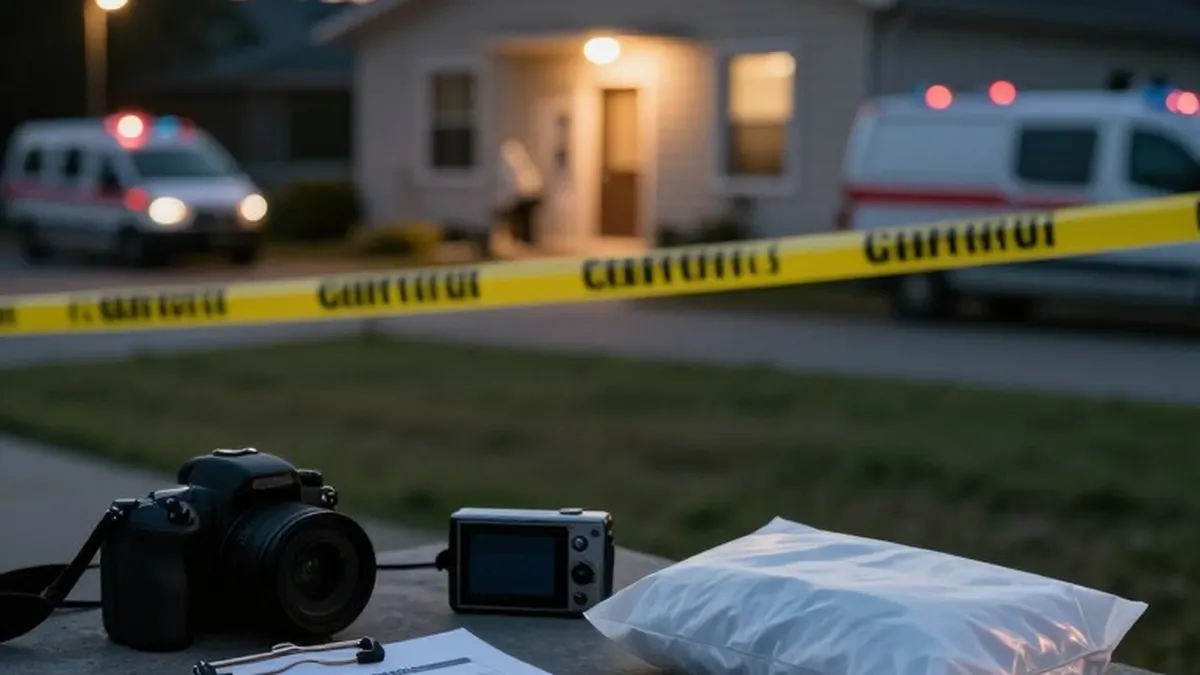
Her 2024 report on identifying sexual crimes during terrorist attacks was presented to senior United Nations officials. This work has since inspired the Israeli Foreign Ministry to develop a first-of-its-kind toolkit in partnership with the UN Office on Drugs and Crime. Scheduled for release in the coming months, the toolkit will guide first responders in identifying and preserving evidence of sexual and gender-based violence at terrorist attack sites to facilitate future prosecutions.
The need for such a protocol became apparent during the chaotic days following the attacks. Dedicated forensic teams were not deployed to Gaza border communities immediately because the area remained an active combat zone. Authorities prioritized body recovery and identification over crime scene preservation. By the time major crimes units arrived six weeks to two months later, most biological samples had degraded. Bitton noted that under such conditions, finding usable forensic evidence is extremely difficult, as items like used condoms may be dried or washed away.
Bitton recounted an incident involving a forensic investigator who was diverted from crime scene work to identify bodies in the south. While examining a woman's body, the investigator noticed signs of sexual assault, including dried semen. However, standard procedures required a physician or forensic pathologist to collect the sample. With only six such specialists available in Israel at the time, the process was complicated. The investigator ultimately decided not to collect the sample, a decision Bitton argued was a result of overwhelming circumstances rather than negligence.
During this period, Bitton also faced what she described as a wave of denial from international allies. She noted a deafening silence from organizations like UN Women, despite her efforts to communicate the magnitude of the violence. In December 2023, she addressed the UN in New York, stating that victims had been silenced twice: first by the perpetrators and second by the silence of international bodies tasked with their protection.
The complexity of the situation became clear during a visit by UN Special Representative Pramila Patten to Israel in early 2024. Bitton observed that while the UN team was experienced in conflict zones, they were less familiar with the evidentiary challenges of a sovereign state like Israel. A common misconception was that a strong legal system would naturally yield strong evidence, leading some to assume that a lack of evidence meant little had happened.
To address this, Bitton and a team of three researchers interviewed first responders, soldiers, and eyewitnesses from the first few hours after the attacks. They applied the Murad Code, a survivor-centric framework for documenting conflict-related sexual violence, to these interviews. The goal was not to gather victim testimonies but to understand the atmosphere and chaos that affected evidence collection. The team found that even when individuals felt they had not seen specific acts, their accounts of the general conditions provided vital insights.
The findings were compiled into a 100-page report, which was presented to the UN in November 2024 and later to partners in Vienna in May 2025. In Vienna, the Israeli embassy connected the team with UNODC. The organization recognized that while the UN had extensive tools for conflict zones, there was a blind spot regarding evidence preservation in states with strong legal systems. This gap could lead to impunity for sexual violence crimes.
The project has since gained support from the German and Swiss governments, as well as Nigeria’s National Counter Terrorism Centre. Bitton emphasized that the toolkit aims to help investigators recognize that evidence can still be recovered from contaminated or chaotic scenes. Even if specific perpetrators cannot be identified, the evidence can serve as proof that sexual violence was used as a tool of war. The ultimate goal is to have the toolkit adopted as an international standard, ensuring that future attacks do not result in the same loss of crucial evidence.
For Bitton, the project represents a shift in how justice is pursued when traditional investigation rules are disrupted. The initiative seeks to ensure that the chaos of an atrocity does not become an additional barrier to accountability. By reimagining protocols for first responders, the team hopes to create a more robust framework for seeking justice for victims of sexual violence in the aftermath of terror.