Sulaymaniyah faces economic strain as US blockade pressures trade with Iran
The Iraqi Kurdish city of Sulaymaniyah is suffering from rising costs and political tension as American efforts to isolate Iran disrupt its vital cross-border commerce.
By Vanessa Diaz ·
Sulaymaniyah, the second largest city in Iraqi Kurdistan, is experiencing significant economic disruption due to the ongoing conflict between the United States and Iran. Local traders report that the journey to move goods across the border has become more dangerous and expensive. Baran, a thirty-year-old diesel trader who operates between Iraq and Afghanistan, noted that while his business previously yielded modest profits, the current environment is far more stressful. He explained that finding drivers is difficult, border reliability has decreased, and diesel prices have surged.
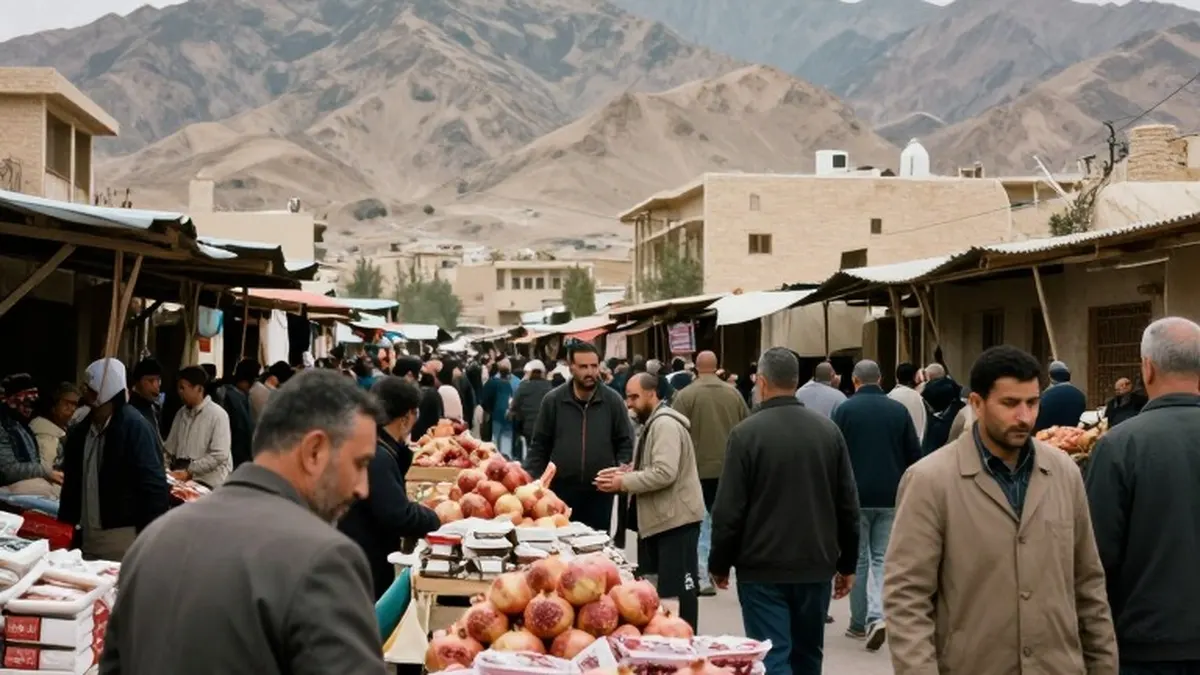
The city’s central bazaar, known for its wide array of goods and vibrant atmosphere, still attracts many shoppers. However, the apparent prosperity masks underlying financial stress. Evin, a twenty-eight-year-old resident, stated that food prices have become unbearable, with some items increasing by two hundred percent. She pointed out that imports from Iran, which were once plentiful, have slowed significantly. Other residents have delayed major purchases, such as computers, because prices have jumped sharply since the start of the war.
Economists indicate that Sulaymaniyah’s trade corridor to China runs through Iran, making the region heavily dependent on its eastern neighbor. Dlawer Ala’Aldeen, president of the Middle East Research Institute, described the local economy as fragile and reliant on cross-border trade, daily labor, and goods from Iran. He argued that the war did not create this fragility but exposed it. When the Strait of Hormuz closed and the US pressured Iraq to reduce border crossings, the city felt the impact immediately in higher prices and lower availability of goods.
The political landscape in Iraqi Kurdistan adds another layer of complexity. The region is governed by two main parties, the KDP in Erbil and the PUK in Sulaymaniyah, which have a history of rivalry. Recently, the PUK withdrew from the regional parliament, citing the reality of two administrations. Bafel Talabani, the PUK leader, has sought to position Sulaymaniyah as a partner to Iran while maintaining ties with the US. He recently visited Iran and described the country as stronger but different, challenging the narrative of imminent economic collapse.
Despite the close ties, the region remains militarily exposed. The US completed its troop withdrawal from Iraq in September, leaving the Kurdistan Region without air defense systems. During the war, the area faced hundreds of Iranian missile and drone strikes. Experts suggest that while the US may not strike directly, Iran views Sulaymaniyah as its backyard and may use it as a target if tensions escalate. Analysts note that the region must appease Iran more to avoid direct attacks, as the US relies on broader economic pressure rather than direct missile strikes on Kurdish territory.
The situation highlights the delicate balance Iraqi Kurdistan must maintain between its American allies and its Iranian neighbor. As the US continues to push for a naval and land blockade of Iran, local businesses in Sulaymaniyah face an uncertain future. Residents and officials alike express a desire for stability across the border, fearing that a collapsed Iranian state would bring chaos, refugees, and armed factions to the region’s longest frontier.