Israeli-backed militias accused of aiding Gaza operation
Palestinian anti-Hamas militias are accused of playing a key role in a recent Israeli military operation in central Gaza, raising questions about the level of coordination between the two forces.
By Kevin Koch ·
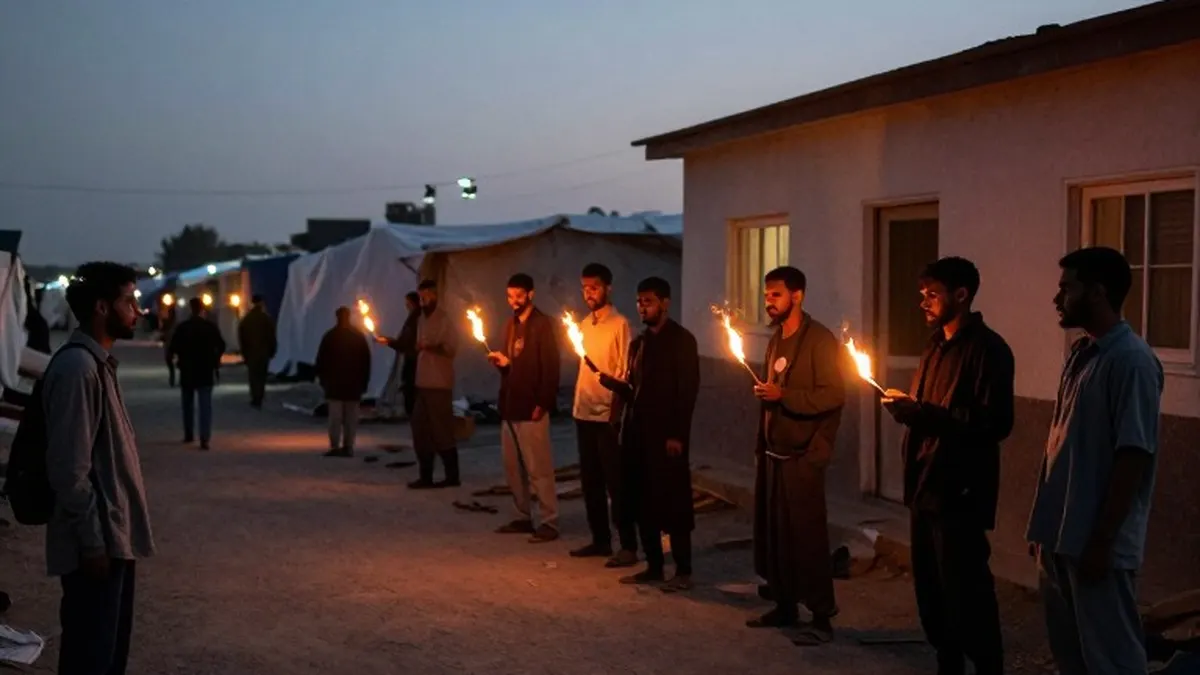
Armed Palestinian men operating in civilian clothing were seen questioning displaced residents in central Gaza on Tuesday evening, according to local witnesses. The incident occurred outside a home on ad-Dawa Street in the Nuseirat refugee camp, where drones flew overhead as the streets emptied. The gunmen, believed to be members of Israeli-backed local militias, forced women into the street and interrogated them by torchlight. They threatened residents who did not answer questions about a specific man and fired shots into the air before withdrawing without making any arrests.
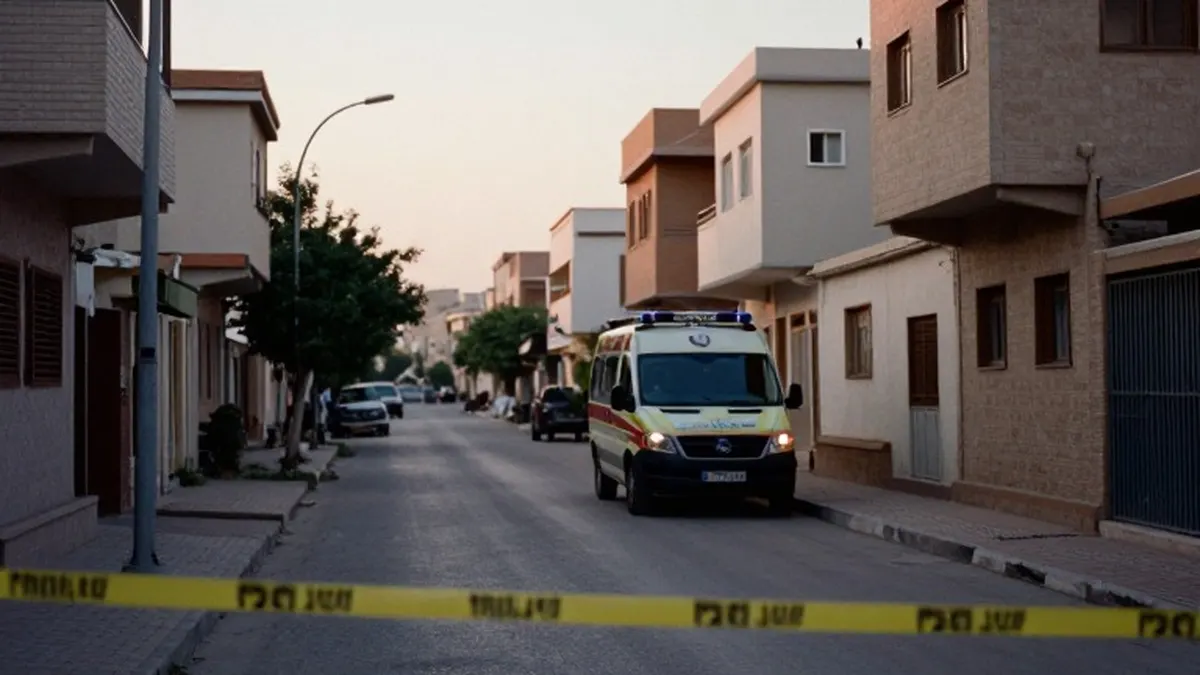
The following day, the Israeli military launched a ground operation near the Nuseirat and Bureij refugee camps. These areas lie west of the Yellow Line, which marks the boundary of Israeli military control following the ceasefire of October 2025. The military closed Salah al-Din Street, the main north-south route in Gaza. The Government Media Office in Gaza reported that approximately 6,000 Palestinians fled the area as a result of the closure and the ensuing military activity.
Israeli officials stated that the operation targeted a tunnel that posed a threat to its troops. By Thursday, the military announced that the operation had been completed. At least one Palestinian was killed in the attacks near the site of the incursion. This sequence of events has raised questions regarding the level of coordination between Israeli forces and Palestinian armed groups, whose activities have expanded across the territory in recent weeks.
A Palestinian security source in Gaza told Al Jazeera that authorities documented the participation of these local armed groups in the operation. The source described the groups as gangs that were financed and armed by Israel to undermine Palestinian internal cohesion by engineering chaos. The source noted that the groups benefited from Israeli military fire cover and the closure of the main street, which also hindered humanitarian operations.
Prime Minister Benjamin Netanyahu has publicly acknowledged Israel's support for armed groups opposed to Hamas during the war, which resulted in the deaths of more than 74,000 people. Last year, he defended the policy by asking what was wrong with it, claiming that supporting these groups had saved the lives of Israeli soldiers.
Palestinian political analyst Iyad al-Qarra noted that Israel has expanded the reach of these groups from the southern areas of Rafah and Khan Younis to central Gaza and Gaza City. He accused the groups of conducting kidnappings and attempted assassinations of Palestinians, including members of various factions, while receiving aerial protection and fire cover from Israeli forces.
Al-Qarra linked the groups' expanding role to the demolition of buildings and forced displacement by Israel, which allowed them to operate in areas where Israeli troops might struggle to access directly. He explained that the Israeli military uses these fighters in front-line operations before committing its own troops. The groups also gather intelligence through local social and family networks while receiving information from the Israeli military.
The groups emerged during the war, with some initially accused of looting aid supplies. Estimates suggest there are about five main groups with several hundred members in total. In April, the Armed Conflict Location and Event Data monitor reported that Israel increased its support, including deploying attack drones during clashes with Hamas. The groups include the Popular Forces in Rafah, led by Ghassan al-Duhaini, as well as factions led by Hussam al-Astal, Shawqi Abu Nuseira, Rami Helles, and Ashraf al-Mansi.
Analyst Wesam Afifa stated that Israel seeks to establish a local security influence that it could retain even after a partial military withdrawal. He compared this strategy to Israel's historical support for the South Lebanon Army before its 2000 withdrawal from Lebanon. Afifa warned that the groups' continued presence could extend Israeli security influence beyond a military withdrawal, potentially leading to their inclusion in Gaza's future security arrangements.