Trump warns of heavy taxes on U.S. firms building AI data centers abroad
The President announced plans to restrict American companies from constructing artificial intelligence infrastructure outside the United States, a move that intensifies tensions with investors and local communities.
By Vanessa Diaz ·
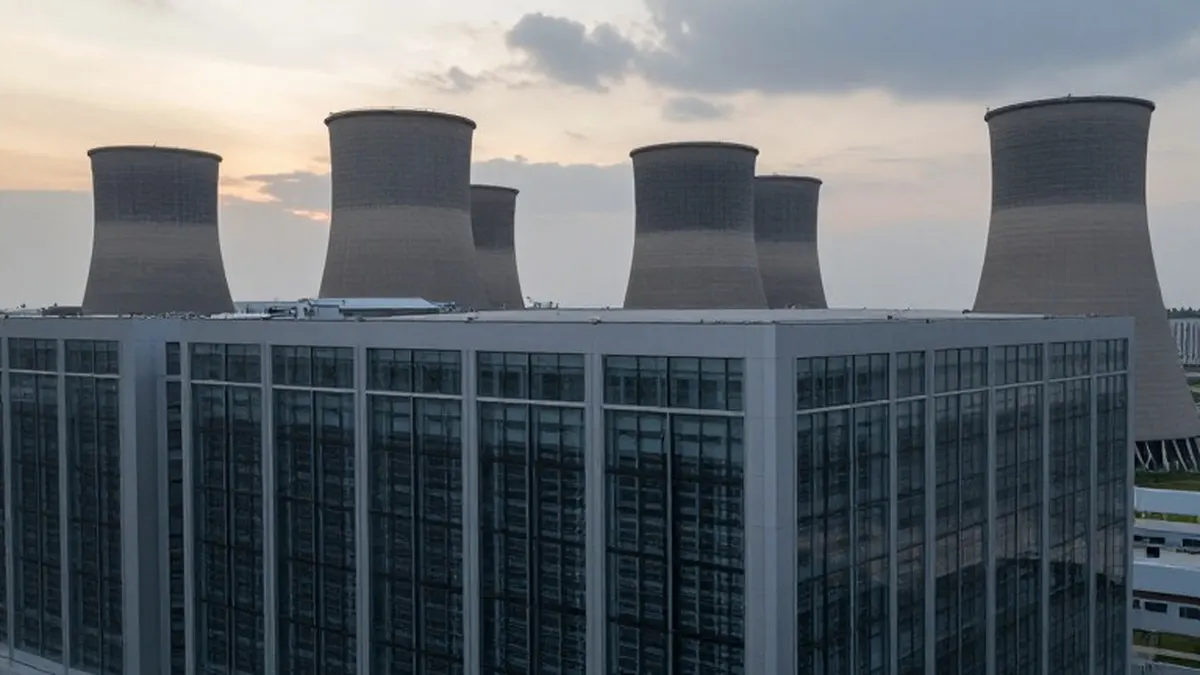
President Donald Trump announced on Friday that he intends to limit the ability of U.S. companies to construct data centers overseas. This declaration marks the latest example of the President’s strong support for the development of large-scale technology facilities, a stance that contrasts with the views of a majority of Americans who oppose such projects.
Speaking from the White House briefing room after returning from a trip to Asia, Trump argued that the new restrictions are essential to keep artificial intelligence infrastructure within the United States. He stated that the country will not permit its companies to build these centers outside of its borders, a policy he believes will prevent a repeat of what he described as a destructive trend seen in the semiconductor industry.
The President indicated that the government would impose financial burdens on any company that attempts to build a data center abroad. He told reporters that the U.S. would levy taxes on such entities, warning that he plans to place tremendous penalties on firms that try to move their operations overseas.
These comments introduced a new layer of uncertainty for the artificial intelligence sector. The announcement came on a day when stock markets experienced significant declines. Even the record-setting initial public offering of Anthropic earlier in the week was not enough to calm investor anxiety regarding the long-term sustainability of AI stocks.
Trump’s position continues to highlight a growing divide between federal leadership and public opinion. He has previously criticized state and local governments that have attempted to slow down data center construction. In a social media post in August, he suggested that communities should only stop these projects if they wish to remain poor and backward, advocating instead for a policy he called letting data reign.
During this year’s midterm elections, the issue of data centers became a major point of contention. Voters overwhelmingly supported candidates who pledged to limit the spread of these facilities. On Wall Street, the strong performance of Democrats who campaigned on this platform contributed to the recent downturn in AI-related stocks, as investors considered the potential impact of stricter regulations on computing resources.
Since November 4, the S&P 500 index has dropped by approximately nine percent. While this decline is attributed to a combination of factors, the election results and policy shifts have played a notable role in the sell-off. The market reaction reflects growing concerns about the financial and regulatory environment surrounding the tech industry.
The specific mechanisms for implementing the foreign data center ban remain unclear. A representative from the White House did not immediately respond to requests for comment on Friday. Trump himself admitted that he had not yet formally briefed his staff on the plan, stating that he was informing them of the policy in real time during the press conference.
The President emphasized that the directive was immediate. He noted that many of his staff members were present in the room and were being told of the plan for the first time. He reiterated that while companies might attempt to build abroad, the new tax structure would make it difficult for them to do so without incurring significant costs.
This development underscores the evolving landscape of U.S. technology policy. As the administration seeks to consolidate domestic infrastructure, it faces the challenge of balancing industrial growth with the concerns of local communities and the volatility of the financial markets.
More News · National news · Report a business · Got a Story?