Trump warns of penalties for tech firms building datacenters abroad
The US president threatened American companies with significant financial consequences if they construct datacenters outside the country, while also addressing geopolitical tensions and domestic political dynamics.
By Vanessa Diaz ·
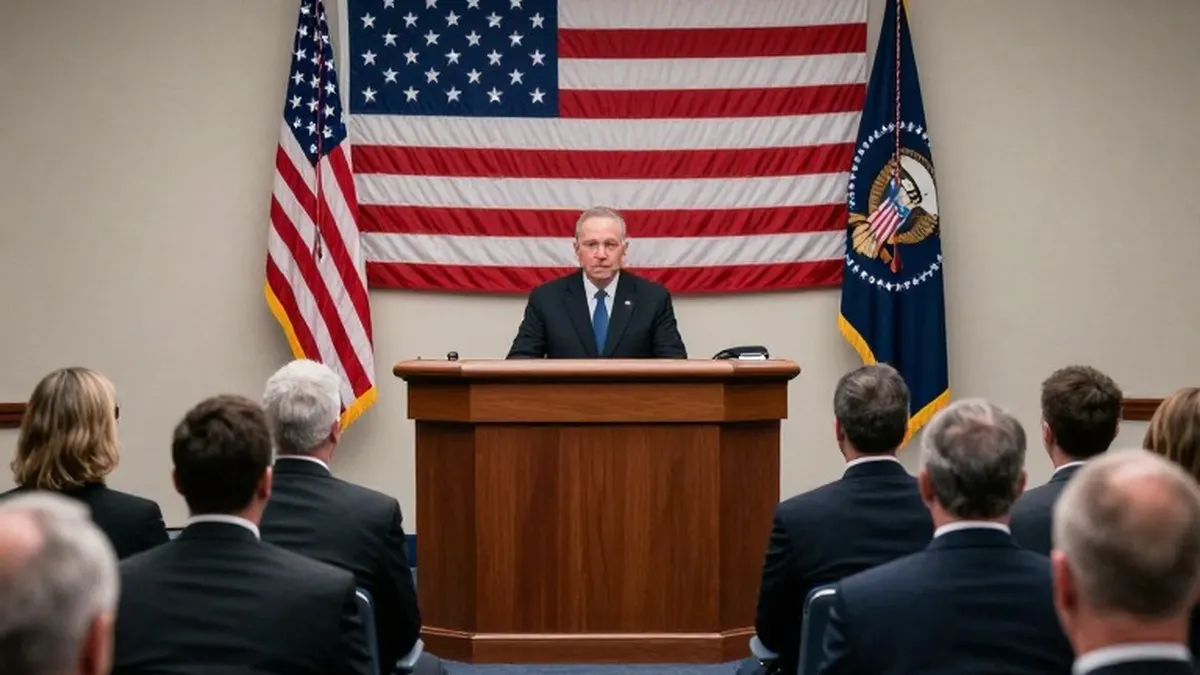
US President Donald Trump issued a warning on Friday that American technology companies could face "tremendous penalties" if they choose to build datacenters outside of the United States. During a lengthy press conference held in the White House briefing room, the president outlined his desire to keep such infrastructure on domestic soil. He stated that he wanted to prevent China from taking control of these facilities, a scenario he said the US could not allow to happen.
Trump noted that he had not yet formally briefed his own officials on the specific details of this plan. He argued that Americans should view datacenters as beneficial assets rather than nuisances. He urged local communities to negotiate with developers for concessions, suggesting that towns should "make them pay" for the right to host server warehouses instead of shutting them down.
This stance comes as the US tech industry attempts to improve its public image. Many residents have expressed opposition to new datacenter projects near their homes. In response, the industry has promised to reduce reliance on government subsidies, increase transparency, and provide more financial support to municipalities that approve the construction of these facilities.
The administration has also taken steps to restrict remote access to advanced US computing chips and servers. New rules issued on Monday aim to limit China's ability to use US hardware to train artificial intelligence models. However, a House committee reported on Wednesday that the US had approved the sale of nearly 900,000 AI chips to China over the previous six months.
Recent scrutiny has focused on Nvidia, a US firm in which Trump is an investor. The company's CEO, Jensen Huang, was recently dismissed following allegations that he was involved with a woman suspected of spying for China. This incident has heightened concerns about the transfer of advanced technology between the two nations.
During the same press conference, Trump addressed reports that Iran was planning to detonate a "dirty bomb" in Washington DC. He described the threat as a rumor but stated that the US would fight if the plan were executed. He claimed that US intelligence had extensive knowledge of Iran's activities, including the identities and locations of key figures.
The president also supported Vice President JD Vance, who had recently blamed the Republican losses in the midterm elections on the Iran war. Trump called Vance's assessment "a very accurate statement" and defended the decision to engage with Iran, stating that the country must be prevented from acquiring a nuclear weapon.
Trump discussed his relationship with Russian President Vladimir Putin, with whom he met alongside Chinese President Xi Jinping at the APEC summit on Thursday. He described his relationships with both leaders as fantastic and argued that these strong ties contribute to the safety of the US. He also reiterated his dissatisfaction with the Department of Justice investigation into Russian attempts to influence the 2016 US presidential election.
The president commented on two prominent Democrats. He said that Gina Hinojosa, who recently won the race for Texas governor, called him and that the conversation was productive. He noted that she wants a strong border and expressed confidence that they could work together. He also praised Hakeem Jeffries, who is poised to become the next speaker of the House, calling him a smart and streetwise individual.