President Trump proposes heavy tax on offshore AI data centers
The President announced a new trade measure aimed at keeping artificial intelligence infrastructure domestic, citing concerns about foreign competition and recent state-level regulatory pushback.
By Jessica Peterson ·
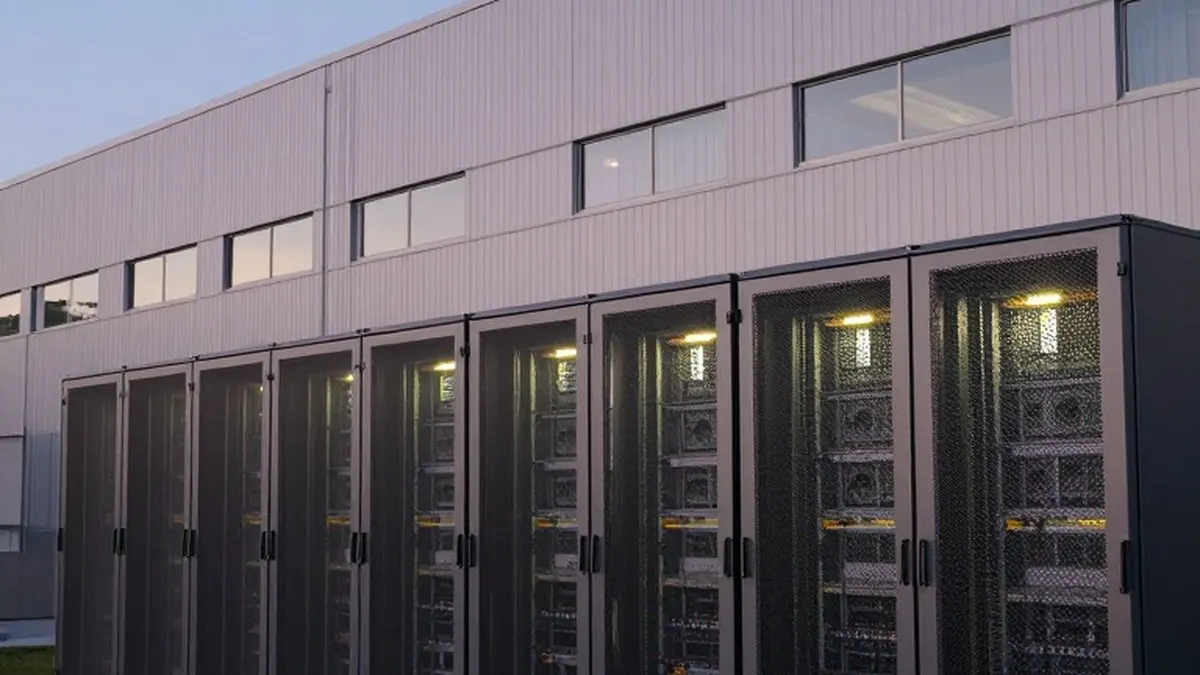
President Donald Trump has pledged to impose a significant financial penalty on American companies that choose to construct data centers outside the United States. This announcement marks the first public mention of the proposal, which is designed to keep critical artificial intelligence infrastructure within the country's borders despite growing resistance to such projects at the local level.
The President made the remarks on Friday during a press conference that followed a summit with China President Xi Jinping and Russia President Vladimir Putin. Standing alongside Vice President JD Vance and Secretary of State Marco Rubio, Trump expressed a firm stance on the matter. He stated, 'We're not going to allow our companies to build data centers outside of our country.'
Trump drew a direct parallel between the current situation with data centers and the previous handling of semiconductor manufacturing. He argued that allowing chip production to move abroad was 'very destructive to our country' and served as the starting point for the nation's economic decline. He warned that if the United States permits data centers to be built overseas, 'China will take them all.'
The President admitted that he had not previously discussed the specific tax plan with his inner circle. 'I don't know if that's a breaking story. But I haven't even said that to my people,' he said. 'But I'm telling them now. They're here. Many of them are here.' This spontaneous disclosure suggests the policy may still be in the early stages of formal development.
The proposal arrives at a complex political moment. A new Democratic majority Congress is scheduled to be sworn in within the next two months, which could complicate the legislative process for implementing new trade measures. Additionally, data center construction has become an increasingly contentious issue among voters in various regions.
Local governments across the nation are responding to community concerns by placing restrictions on new applications for data center construction. Some states have even implemented moratoriums on new projects. These local actions create a pushback that may force companies to look for alternative locations, potentially including countries outside the United States.
Trump's threatened tax is intended to make the option of building abroad less financially appealing to corporations. By increasing the cost of offshore expansion, the administration hopes to incentivize companies to navigate the domestic regulatory landscape rather than seeking cheaper or less regulated environments in foreign markets.
During his remarks, Trump also offered advice to local officials regarding the development of these facilities. He suggested that communities should 'take advantage' of the data centers rather than shutting them out entirely. 'Whoever wins SI wins. And you ought to take advantage of the data centers. Make them pay you. Make them pay your community. But take advantage. Don't shut them off. And there's always somebody else in this country. But if it's not this country, there's somebody else outside.'
The strategy reflects a broader effort to maintain American dominance in the emerging AI sector. While the specific details of the tax remain unclear, the President's strong language indicates a desire to prevent the loss of key technological assets to foreign competitors. The administration is positioning the measure as a necessary step to correct past mistakes in industrial policy.
As the political landscape shifts with the upcoming change in congressional control, the fate of this proposal will depend on how quickly it can be formalized and legislated. For now, the threat of a 'tremendous tax' serves as a signal to the tech industry that the White House is closely monitoring where the next generation of computing power will be housed.
More News · National news · Report a business · Got a Story?