Trump Announces Plan to Tax Overseas Data Center Construction
The U.S. president declared that American companies building data centers abroad will face a substantial tax penalty, a policy that caught even his own staff off guard.
By Jessica Peterson ·
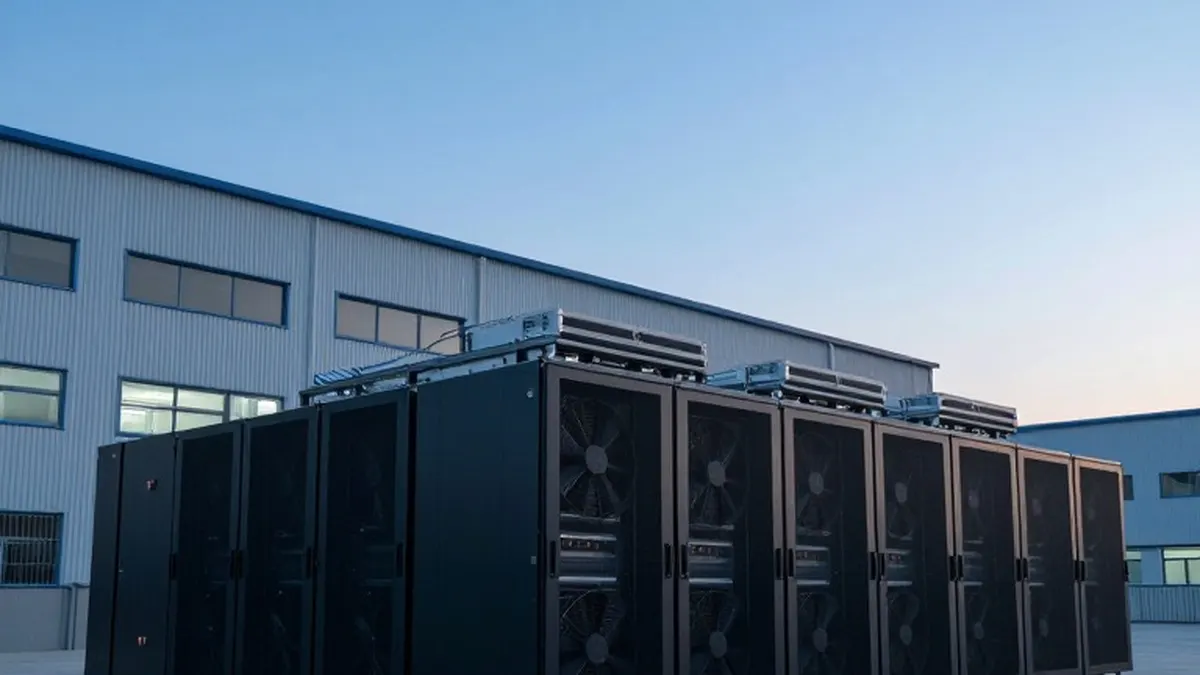
President Donald Trump announced on Friday that the United States intends to prohibit its companies from constructing data centers in foreign countries. He stated that any firm choosing to build these facilities overseas will be subject to a significant tax penalty, a move designed to encourage more domestic infrastructure development.
Speaking at a White House press conference, the president emphasized the administration's determination to keep digital infrastructure within national borders. He described the initiative as a major priority, noting that the government would fight vigorously to secure these projects for the U.S. economy. The announcement appeared to surprise members of his own team, who had not been briefed on the specific details of the policy prior to the public address.
Trump acknowledged the unexpected nature of the reveal by stating that he had not even shared the news with his staff before telling the public. He remarked that he was informing them of the decision in that moment, confirming that the policy was now official. This spontaneous announcement highlights the administration's aggressive approach to reshaping the nation's technological landscape.
The new push for domestic data center construction occurs despite clear public sentiment against such projects. Recent polling data indicates that many Americans are skeptical of these facilities being built near their communities. A survey conducted by CNBC found that a majority of registered voters opposed the idea of having an artificial intelligence data center within ten miles of their home.
Specifically, the All-America Economic Survey revealed that 64 percent of registered voters were against such construction nearby, while only 13 percent expressed support. This significant gap in public opinion suggests that the administration faces potential political headwinds as it promotes the expansion of these energy-intensive facilities across the country.
If the administration proceeds with its threat to tax overseas construction, it will impact several major technology corporations. Leading companies such as Alphabet, Amazon, Microsoft, Meta, and Oracle have already established data centers in various foreign locations. These international expansions are generally driven by the need to serve clients in nearby regions and to comply with local regulatory requirements.
Trump argued that the United States possesses the necessary resources to attract these investments. He pointed to abundant energy supplies and other assets as key advantages for domestic sites. The president suggested that many areas within the country are eager to host these facilities and are well-equipped to support them.
The announcement followed a recent trilateral summit in China, where Trump met with Chinese President Xi Jinping and Russian President Vladimir Putin. While the meeting addressed several global issues, it appeared to yield limited concrete results. During the summit, Xi reportedly praised the U.S. progress in artificial intelligence, using the term super intelligence, which Trump noted was also preferred by his Chinese counterpart.
The policy shift marks a significant moment in the ongoing debate over the location of critical digital infrastructure. By imposing financial penalties on overseas construction, the White House aims to leverage tax incentives to redirect investment toward American soil. The coming weeks will likely see reactions from major tech firms and further clarifications on how the tax will be implemented.
More News · National news · Report a business · Got a Story?