20,000 a Week: The Ambitious Target Tesla Says It Must Hit by Late 2027
Tesla CEO Elon Musk has pushed the timeline for external humanoid robot deliveries back to the end of 2027, citing unresolved issues with durability and AI capabilities.
By Kevin Koch ·
Tesla aims to produce approximately 20,000 Optimus humanoid robots per week, a throughput rate equivalent to a million units annually. On the company’s Q3 2026 earnings call, CEO Elon Musk confirmed that while the manufacturing infrastructure is largely in place, the company is not yet ready to ship these units to outside customers until late 2027. This target represents a significant scale-up from current output levels, which are measured in the hundreds per week.
The shift in the delivery timeline reflects a series of delays that have characterized the project since its inception. In 2024, Musk projected that Optimus would be used internally in 2025 and available for high-volume external use in 2026. By January 2025, he suggested that 10,000 robots would be built that year, with several thousand performing useful work. That estimate has since been revised, with external deliveries now pushed to the final months of 2027.
According to Musk, three primary hurdles remain: the robot’s AI architecture, its electromechanical design, and its overall reliability. He stated that the current units are the first to be considered "production-quality," implying that earlier prototypes were not ready for industrial use. The goal is to deploy these robots in dangerous, repetitive, or around-the-clock industrial jobs, but only after they prove they can withstand a month of continuous use without wearing out.
A major point of contention is the robot’s hands. A Tesla Optimus engineer noted during the call that the hand is one of the most difficult hardware components, involving custom gears that still raise reliability concerns. Musk explained that the fingers must be soft enough to handle delicate items yet durable enough to survive constant wear, a challenge compounded by the fact that robotic skin cannot heal like human skin. Reports from last month indicated that the hand and forearm contained over 100 small parts assembled by hand, with touch sensors facing their own set of reliability issues.
To address the AI gap, Tesla plans to build a fleet of 10,000 to 20,000 robots to practice tasks in an "Optimus Academy." This is necessary because the company lacks the massive data set from a fleet of cars that powers its Full Self-Driving (FSD) system. Tesla also plans to integrate its AI5 chip into the robots around April 2027. Musk promised a video within the next month or two showing the robot performing unscripted tasks, arguing that many current demonstrations are merely pre-programmed routines that would fail in real-world conditions.
Competitors are advancing on parallel tracks. XPeng, a Chinese automaker, turned on an automated production line for its IRON robot in Guangzhou in September, with over 80% of core processes automated. XPeng targets mass production by the end of 2026 and deliveries in the first half of 2027. Meanwhile, Boston Dynamics began producing its electric Atlas robot in January, with all 2026 deployments already committed, including to Google DeepMind. Hyundai, which owns Boston Dynamics, opened a training center in Georgia in September where Atlas is learning to sequence car parts.
Despite these advancements, Musk claimed on the call that to the best of his knowledge, "there is no one that is even close to Tesla" in general-purpose humanoid robotics. However, Boston Dynamics has taken a pragmatic approach to the hand problem by prioritizing sturdy grippers for industrial parts over human-like dexterity, effectively bypassing the specific issue Tesla says is holding it back. Additionally, Boston Dynamics hired Milan Kovac, Tesla’s former head of Optimus, in January, signaling a transfer of key expertise.
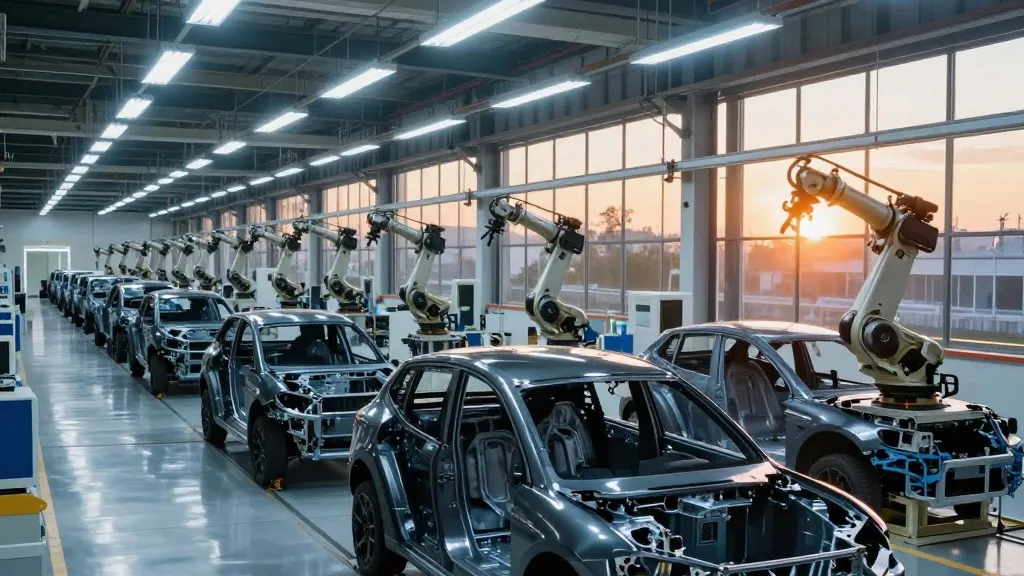
The path forward for Tesla involves validating its new production line in Fremont, where the high-volume manufacturing setup was previously used for Model S and Model X. While most of the line is installed, the design is still evolving, which could extend the time needed to reach the 20,000 units-per-week target. Investors and observers will be watching the upcoming video demonstration to see if the robot can perform genuine, unscripted work, a test that has historically been the differentiator between a promising prototype and a viable product.