Australian and New Zealand Drivers Lose Cybertruck Hope After Seven-Year Wait
Tesla has voided all regional reservations, triggering refunds and offering incentives to switch to existing right-hand-drive models.
By Kevin Koch ·
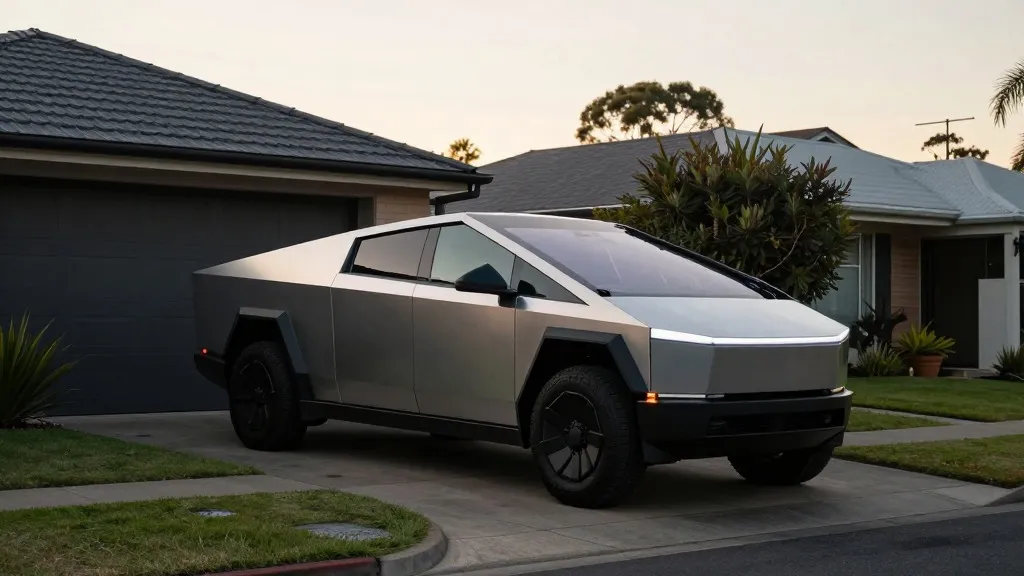
For nearly seven years, residents in Australia and New Zealand held reservations for a vehicle that Tesla has now confirmed it will never build for their markets. Starting today, reservation holders are receiving notifications that their orders are officially void. This development concludes a long period of uncertainty for buyers who began placing deposits in late 2019, only to be told this week that the electric pickup will not be produced for the region.
The cancellation notice, shared widely on social media and forums this morning, states that Tesla’s plans to manufacture the Cybertruck for Australia and New Zealand have been discontinued. Consequently, the company can no longer fulfill existing reservations. Tesla has assured customers that all payments made will be fully refunded, with the process expected to be completed within 30 days. In a gesture to retain customers, the automaker is offering a free one-year subscription to its Full Self-Driving (Supervised) feature to anyone who switches their order to a new Model 3 or Model Y.
This strategic shift appears designed to convert lapsed pickup interest into sales for vehicles Tesla already produces in right-hand drive configurations. The timing of the announcement is notable, as it arrived just one day after Tesla reported its financial results for the third quarter of 2026. By steering customers toward established models, the company aims to maintain revenue streams in a region where the specific hardware they promised is no longer viable.
The situation stems from a fundamental mismatch between the vehicle’s design and the market’s requirements. The Cybertruck is currently built exclusively in left-hand drive, which is incompatible with the driving standards in Australia, New Zealand, the UK, and Japan. Furthermore, Australia requires specific certification under its own design rules. While Tesla shipped a unit to Australia for a display tour in 2024, and CEO Elon Musk previously suggested certification for other markets might happen "sometime next year," a right-hand-drive version has never been realized. The lack of a suitable vehicle left early reservation holders waiting through a period where the original order page was quietly closed in May 2022, replaced by a button to "Get updates," without immediate refunds.
Financial data suggests the investment in a new regional production line was difficult to justify. Tesla’s international launches for the Cybertruck have so far been limited to left-hand-drive markets, including South Korea, the UAE, Saudi Arabia, Qatar, Jordan, and Israel. The vehicle remains blocked in the European Union primarily due to pedestrian safety concerns. With global production capacity built for 250,000 units annually but recent quarterly deliveries of the Cybertruck estimated at only 7,000 to 8,000 units, the company faces a challenge in scaling production to meet demand for a niche segment.
Contextually, Australia was once considered a significant potential market, with crowdsourced data from 2020 indicating it held the third-largest number of reservations globally, accounting for roughly 3% of the total. However, the changing nature of the vehicle and its pricing has altered the value proposition for local buyers. Many of the original reservations were for a lower-cost version of the truck that has since been reconfigured. With U.S. sales declining significantly from their peak in 2024, the premium cost of an imported, certified version may have further diminished its appeal.
Looking ahead, the cancellation confirms that the Cybertruck is becoming a niche product largely confined to North America and a few other left-hand-drive nations. Tesla is unlikely to invest further in re-engineering the vehicle for right-hand-drive markets, particularly given the combined population of Australia and New Zealand. For ordinary consumers, the immediate impact is the return of their deposits and the opportunity to secure a discount on existing models, while the broader outlook suggests a more focused strategy on selling the current left-hand-drive inventory to existing international buyers.
More Business · Bad Business · Report a business · Got a Story?